
I remember sitting in a café once, watching two friends greet each other. One was loud, animated, hugging everyone, telling stories that got bigger with each retelling. The other was quiet, observant, smiling politely but saying little.
Same place. Same situation. Completely different humans.
And I remember thinking: Who are we really?
The loud one, is that who he is at 3am when he can’t sleep? The quiet one, does she open up completely with her family? And here’s the question that’s haunted philosophers and psychologists for centuries: Is there a “real” us underneath all the different versions we show the world?
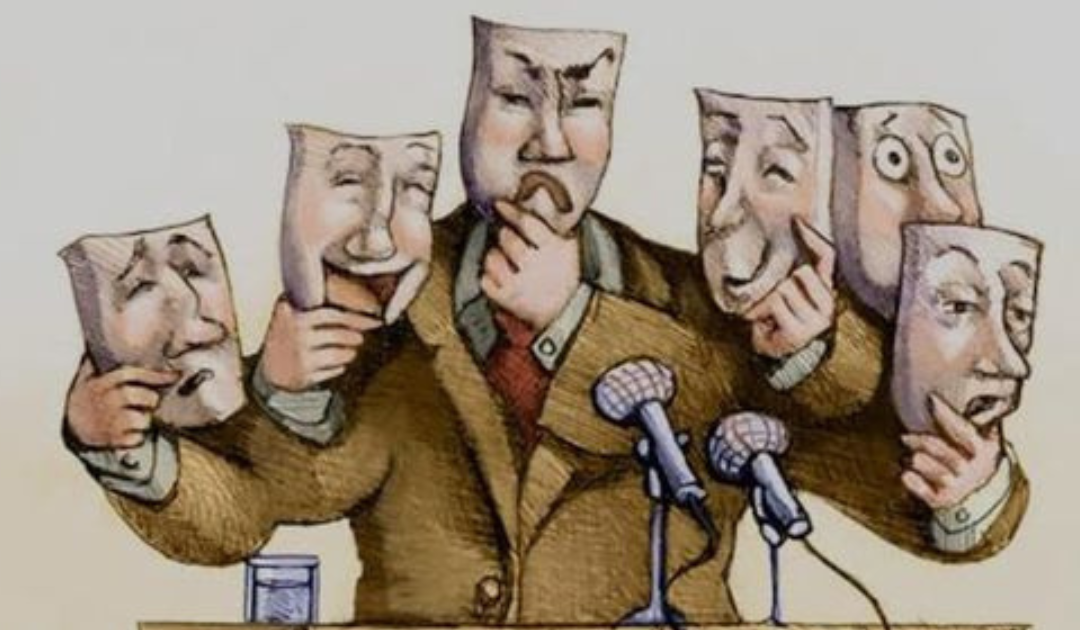
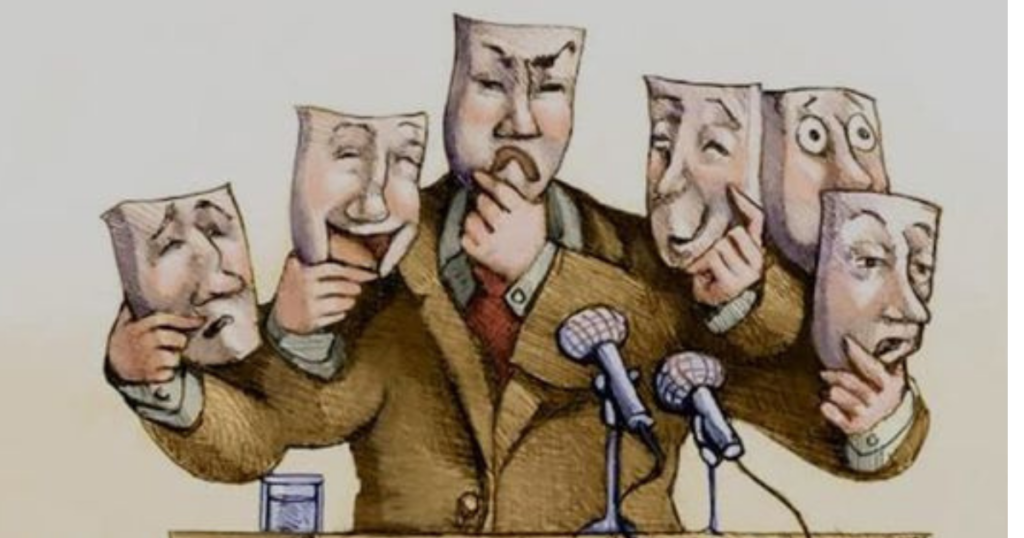
The word “personality” comes from the Latin word persona, theatrical masks worn by actors in ancient Rome. Think about that. The very word we use to describe who we really are actually means “mask.” The thing you put on to play a role.
So which is it? Are we all just playing characters? Or is there something stable underneath, a consistent “you” that follows you everywhere, from your childhood bedroom to your workplace to your most private thoughts?
Over the next few minutes, I’m going to take you inside the fascinating, sometimes messy, world of personality psychology. We’ll look at inkblots that supposedly reveal your deepest secrets, quick tests that might tell you nothing at all and the five traits that researchers believe capture the essence of every human on earth.
By the end, you might see yourself and everyone you know, a little differently.
Quick disclaimer: I’m Maryam, a digital journalist with a psychology and counselling background. Everything I share comes from my research, my nerdy fascination with how people work and my psychology degree. This is my interpretive lens, not a textbook, not sponsored by anyone, just me trying to make sense of the beautiful mess that is the human mind.
Table of Contents
1. What Do We Actually Mean When We Say “Personality”?
I’ve got a question for you.
Think of someone you know really well, a best friend, a partner, a sibling. Now, if you had to describe them in three words, what would they be?
Go on. Actually try it.
Got them?
Now here’s the trickier question: are those three words always true about them? Have they been true for the last ten years? Will they be true ten years from now?
This is exactly the problem psychologists have been wrestling with for over a century. Back in 1937, a psychologist named Gordon Allport sat down and did something both brilliant and slightly insane: he went through the dictionary and found over 50 different definitions of personality.
Fifty. For one word.
And then he wrote something that still makes me smile: “Everyone, it seems, knows what personality is, but no one can precisely describe it.”
So what do we do with that? How do you study something you can’t even define?
Most psychologists have settled on a working definition that goes something like this: Personality is the set of psychological traits and mechanisms within the individual that is organised and relatively enduring and that influences interactions with the environment.
Translation: it’s the stuff inside you that stays mostly the same over time and shapes how you deal with the world.
Here’s what I’ve learned from sitting with this question: Personality isn’t one thing, it’s the answer to several questions at once.
When we talk about someone’s personality, we’re really asking:
- Did they get this from nature or nurture?
- Are unconscious drives running the show?
- Why do they stay the same (or change) over time?
- Do they act the same in every situation?
- Is there a consistent thread running through their whole life?
The ancient Romans wore masks on stage, personae, to play characters the audience could recognise. The comedy mask. The tragedy mask. The villain. The hero.
But here’s the thing about masks: eventually, if you wear one long enough, it starts to feel like your actual face.
So maybe personality isn’t about finding the “real” you behind all the masks. Maybe it’s about understanding why you choose different masks for different stages and why some masks fit so well you forget you’re wearing them.
Three Ways Psychologists Try to Measure You
Imagine I told you I wanted to measure your personality. Really get to know who you are at your core.
How would you want me to do it?
Would you want me to ask you questions? Watch you in your daily life? Show you pictures and see what you say?
Turns out, psychologists have tried all three. And they all have strengths. And they all have problems.
Clinical assessment uses things like projective tests, where you’re shown something vague (an inkblot, a picture, an incomplete sentence) and asked what you see. The idea is that you’ll “project” your unconscious feelings onto the ambiguous stuff.
Behavioural assessment does something completely different. Instead of asking about your inner world, they watch what you actually do. They count behaviours. Track patterns. Observe you in real situations. But here’s the problem: it’s complicated and time-consuming and not many good methods exist yet.
Psychometric assessment is probably what you’ve experienced, those questionnaires that ask you to rate yourself on scales. “I like being the centre of attention.” “I often worry about things.” “I make people feel at ease.” You tick boxes and a score pops out.
So which one is right?
All of them. And none of them. Because here’s the truth psychologists have learned the hard way: you are not just one thing that can be captured by one method.
Think of it like photographing a building. A photo from the front tells you something. A photo from the roof tells you something else. A video of people going in and out tells you something different still. Which one is the “real” building?
They all are. And none of them are the whole story.
The same goes for you. A questionnaire captures what you say about yourself. Observation captures what you do. Projective tests might hint at what you don’t even know about yourself. Put them together and you start to get a fuller picture.
The trick is remembering that no single method owns the truth about who you are.
The Inkblot Test: Can a Blob Reveal Your Secrets?
I want you to imagine you’re sitting in a quiet room with a psychologist. On the table in front of you is a card. On the card is a splotch of ink, symmetrical, abstract, meaningless.
And the psychologist says: “What might this be?”
What do you see?
This is the Rorschach Inkblot Test. Developed in the 1920s, it became one of the most famous and controversial, tools in all of psychology. The idea, borrowed from something called the Thematic Apperception Test, is simple: when faced with something ambiguous, you’ll project your own unconscious feelings onto it. The inkblot doesn’t mean anything, so whatever you see must be coming from inside you.
See a bat? Maybe you’re anxious. See two people dancing? Maybe you’re lonely. See nothing at all? Maybe you’re defensive.
For decades, clinicians used these tests to diagnose patients, explore traumas and uncover hidden conflicts. The assumption was that personality is mostly unconscious, that we’re walking around with feelings and drives we don’t even know we have.
Here’s the problem: they don’t really work.
I know that sounds disappointing. The idea of inkblots revealing our deepest secrets is romantic. It feels like magic. But research has repeatedly shown that projective tests lack both reliability and validity.
Reliability means: if two different psychologists look at the same responses, do they come to the same conclusion? Often, no. One sees anxiety, the other sees creativity. One sees trauma, the other sees imagination.
Validity means: does the test actually predict what it’s supposed to? Does seeing a bat mean you’re actually anxious in real life? The evidence says… not really.
This doesn’t mean the unconscious doesn’t exist. It doesn’t mean we don’t project. But it does mean that measuring what’s hidden is much harder than we hoped. You can’t just show someone a blob and expect their soul to spill out.
The psychological truth? The most interesting things about us are often the hardest to measure. And maybe that’s okay. Maybe the mystery is part of the point.
The World’s Quickest Personality Test
I’m going to give you a personality test. The world’s quickest one. It won’t tell you everything, honestly, it won’t tell you much at all. But it might tell you something interesting about how you see yourself.
Step 1: Write down three adjectives that describe the way you typically feel, think and behave. Be honest. Be quick. There are no wrong answers..
Got them? Good.
Step 2: Now look at those three words. How many of them are positive? Be honest, this is just for you.
Step 3: Ask yourself: would your best friend use these same words to describe you? Would your family?
Step 4: Now here’s the really interesting question: do your best friends share similar characteristics to you? Do your family members?
If you’re like most people, something probably happened in that exercise.
First, you probably described yourself pretty positively. That’s not arrogance, it’s normal. When researchers ask people to rate themselves compared to others, we consistently rate ourselves as more ethical, more conscientious and better drivers than average . Mathematically, that’s impossible. Psychologically, it’s just how we’re wired.
Second, you might have noticed something about the people around you. If your friends share your characteristics, is that because they influence you or because you chose people like you in the first place? If your family shares your traits, is it genes or upbringing?
The quick test doesn’t give answers. But it raises questions. And that’s actually the point.
Here’s what I’ve learned from doing this exercise with people: we’re not great at seeing ourselves clearly. We have blind spots. We have biases. We have versions of ourselves we carry around that might not match what other people see.
The question isn’t whether your self-assessment is “true.” The question is: what does it tell you about how you want to be seen? And is there a gap between that and how you actually show up?
The Big Five: The Traits That (Almost) Explain Everyone
So if inkblots don’t work and self-reports are biased, what does work?
For the last few decades, most personality psychologists have rallied around something called the Five Factor Model or the “Big Five“. It’s not perfect. But it’s the closest thing we have to a map of human personality.
Here’s how it was built. Researchers started with a simple idea called the lexical hypothesis: if a trait is important enough to matter in human life, we probably have a word for it in language. So they took all the trait words in the English dictionary, thousands of them and started looking for patterns.
What emerged, again and again, was five broad categories. Five dimensions that seem to capture the essential ways humans differ from each other.
Extraversion: Are you outgoing and energetic or reserved and cautious? High scorers love being around people. Low scorers value alone time.
Agreeableness: Are you compassionate and cooperative or competitive and sceptical? High scorers avoid conflict. Low scorers aren’t afraid to push back.
Conscientiousness: Are you organised and responsible or spontaneous and careless? High scorers plan ahead. Low scorers go with the flow.
Neuroticism: Are you sensitive and prone to worry or secure and relaxed? High scorers feel things deeply. Low scorers stay calm under pressure.
Openness to Experience: Are you curious and imaginative or practical and traditional? High scorers love new ideas. Low scorers prefer the familiar.
Here’s what’s remarkable: these five factors show up not just in English, but in studies across different languages and cultures. Not perfectly, openness is the shakiest across cultures, but consistently enough to suggest that these dimensions reflect something real about human nature.
But here’s what the Big Five can’t do: explain where these traits come from, how they develop or why they change.
Gray’s Approach-Inhibition Theory offers one biological explanation, suggesting our brains have two systems, the Behavioural Approach System (BAS) that seeks rewards and the Behavioural Inhibition System (BIS) that avoids punishment. Extraversion and neuroticism might be rooted in how sensitive these systems are.
But even that doesn’t tell the whole story. The Big Five describe what’s there. They don’t explain how it got there or what it feels like from the inside.
Think of it like a map of a city. The map shows you the streets and neighbourhoods. It doesn’t tell you what it’s like to live there. The Big Five are a map of personality. Useful? Absolutely. The whole story? Not even close.
The Personality Paradox: Why You’re Not the Same Person Everywhere
Here’s something you’ve probably noticed about yourself.
You’re not the same person at work that you are at home. You’re not the same person at a party that you are alone in your room. You might be loud with friends and quiet with strangers. Confident in some situations and insecure in others.
So which one is the “real” you?
In 1968, psychologist Walter Mischel dropped a bombshell on the field. He pointed out something that should have been obvious but somehow wasn’t: people behave much less consistently than trait theories predict
The correlation between measures of traits taken in different situations? Often around .30, meaning traits explain only about 10% of the variation in behaviour. That’s not nothing. But it’s also not the strong, consistent pattern we might expect if personality was a fixed thing we carried everywhere.
This became known as the person-situation debate. Are our actions determined by who we are or where we are?
The answer, it turns out, is both.
Some situations are “strong”, they provide clear guidelines for behaviour. A courtroom. A church. A fancy restaurant. In these places, the situation overwhelms personality. Almost everyone behaves more or less the same.
Other situations are “weak”, few guidelines, lots of freedom. Alone in your room. In a park with nothing to do. Here, personality shines through.
So here’s the psychological insight that changed how I see people: You’re not inconsistent. You’re contextual.
Mischel later developed this into Cognitive-Social Theory, suggesting that stable personality traits interact with what he called “cognitive-affective units”, your competencies, encoding strategies, goals and emotional responses. You have stable patterns, yes. But those patterns only activate in relevant situations.
This is called self-regulation, the way you adjust your behaviour based on past experience and your reading of the current situation.
Think of it like water. Water has stable properties, it’s wet, it flows, it’s H2O. But water in a river behaves differently from water in a cup, which behaves differently from water in a cloud. Same stuff. Different situations. Not inconsistent, responsive.
You’re not a fraud for being different in different contexts. You’re human.
Culture and the Self: How Where You’re Born Shapes Who You Are
I want you to imagine two people.
One grows up in a culture that constantly tells them: be independent. Stand out. Follow your own path. Your achievements are yours alone.
The other grows up in a culture that says: fit in. Support your group. Harmony matters more than being special. Your achievements belong to everyone who helped you.
Are these two people going to develop the same kind of personality?
Of course not. And yet, for most of psychology’s history, we studied personality as if everyone on earth was a Westerner living in an individualistic society.
Culture is “the shared system of meaning that provides standards for perceiving, believing, evaluating, communicating and acting among those who share a language, a historic period and a geographic location” In other words: it’s the water we swim in. So obvious we don’t even notice it.
Researchers Markus and Kitayama (1991) drew a crucial distinction between independent and interdependent selves.
In individualistic cultures (like the US, UK, Australia), the self is separate. Unique. Defined by internal attributes. The goal is to be authentic, express yourself, stand out.
In collectivistic cultures (such as many Asian, African, and Latin American societies), the self is connected. Relational. Defined by roles and relationships. The goal is to fit in, maintain harmony and fulfil obligations.
Here’s a simple experiment that shows this: Give people a choice of pens. Five pens in a set, two colours. Asians tend to choose the majority colour. North Americans tend to choose the minority colour. Same choice. Different selves.
Here’s what this means for understanding personality: there is no universal “healthy” personality.
In an individualistic culture, being unique and assertive is a sign of strength. In a collectivistic culture, that same behaviour might be seen as rude or unstable. The “same” trait looks completely different depending on where you stand.
This doesn’t mean cultures are uniform, subcultures exist, individual differences exist and in some cultural contexts, the whole concept of “personality” as a key to understanding behaviour might make no sense at all.
But it does mean that any theory of personality has to account for where that personality developed. You can’t understand the person without understanding the water they’ve been swimming in their whole life.
The psychological truth? The self is not just inside you. It’s also between you and everyone around you.
Conclusion: The Masks We Choose
We started with masks. The persona, the theatrical face worn by ancient actors. And we’ve travelled through inkblots and questionnaires, through the Big Five and the personality paradox, through brains and cultures and the mystery of who we really are.
So where does that leave us?
I think it leaves us here: You are not one thing. You never were.
You are the traits you were born with and the culture that shaped you. You are the situations that call forth different versions of yourself and the stable patterns that run through all of them. You are the mask you choose and the face underneath, except the line between them gets blurrier the longer you look.
Gordon Allport was right. Everyone knows what personality is, but no one can precisely describe it. Maybe that’s because it was never meant to be pinned down. Maybe the point isn’t to find the one true definition. Maybe the point is to keep asking the question and to stay curious about the answer, whatever form it takes today.
A small action to take: notice one situation this week where you act differently and ask, “What in this environment is shaping this version of me?”
Next read: Power, Threat, Meaning: A New Way to Understand Mental Distress
10 FAQs
Can my personality really change or am I stuck with what I’ve got?
Both. Research shows that personality traits are relatively stable but not fixed. Conscientiousness and Agreeableness tend to increase with age. Neuroticism tends to decrease. Major life events can shift things. You’re not stuck, but change usually happens slowly.
Are personality tests like the one in this article accurate?
The quick test I gave you? Not really, it’s just for illustration. But properly validated measures like the Big Five inventories have good reliability and predict real-life outcomes like career success, health and relationships.
Why do I act so differently around different people?
That’s normal! It’s called context-dependent behaviour. You have different relationships, different histories, different expectations with different people. Being adaptable isn’t fake, it’s human.
Is introversion a problem that needs fixing?
Absolutely not. Introversion and extraversion are just different ways of processing the world. Introverts often have rich inner lives, deep focus and meaningful one-on-one connections. The goal isn’t to become extraverted, it’s to understand your own needs and honor them.
Can siblings have completely different personalities?
Yes and they often do. Shared genes don’t mean identical personalities. Birth order, different experiences with parents, different friend groups and just random chance all shape who we become.
What’s the difference between personality and character?
Personality is usually used to describe your natural tendencies, the traits you’re born with and develop. Character often implies moral qualities, your values, integrity, how you treat people. One is about what you’re inclined to do. The other is about what you choose to do.
Do animals have personality?
Yes! Researchers study personality in dogs, cats, chimpanzees, even fish. They find similar patterns, some animals are bolder, some more anxious, some more social. Personality isn’t uniquely human.
Why do personality tests ask the same question in different ways?
To catch inconsistencies. If you answer “I love being the centre of attention” and then later agree with “I prefer to blend in,” the test flags that. It’s trying to measure your true tendency, not random answers.
Can trauma change your personality?
Yes, significant trauma can shift personality, sometimes temporarily, sometimes permanently. It might increase neuroticism, decrease openness or change how you relate to others. But people also show remarkable resilience.
How much of personality is genetic?
Twin studies suggest that about 40-50% of the variation in personality traits is heritable. The rest comes from the environment, but not necessarily the environment you’d expect. Shared family environment actually seems to matter less than unique, individual experiences.
