
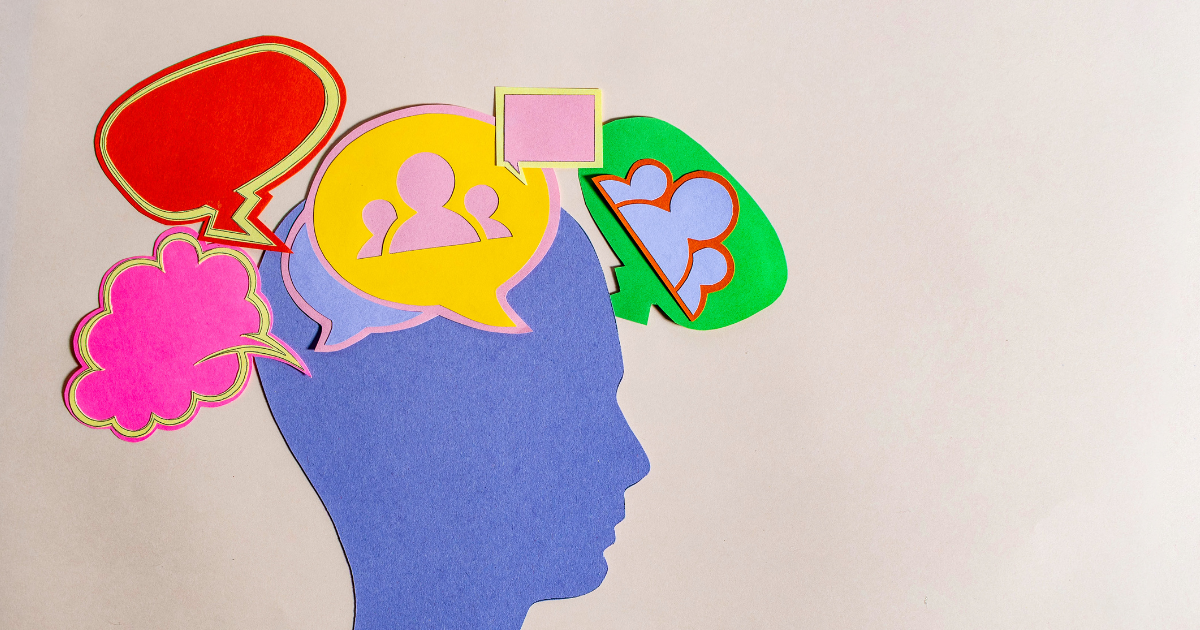
We go through life watching people. We watch our parents argue, our friends fall in love, our colleagues crack under pressure. We watch strangers react with joy or rage on the evening news. And we always ask the same question: Why?
Why did they do that? Why do I feel this way? What’s really going on beneath the surface?
For years, I consumed these stories as a journalist, reporting on events as they happened. But I always felt a layer was missing. I was describing the “what,” but not the “why.” That curiosity is what pushed me to formally study psychology and counselling. It’s what turned me from a reporter of facts into a documentarian of the human condition.
This blog and this first deep dive, is the result of that journey. We’re going to build a framework together. Think of this as your personal orientation to the human operating system. We’re going to explore the five core pillars of psychology, the building blocks that shape every thought you have, every relationship you build and every decision you make.
My promise to you is this: By the time you finish this article, you won’t just be watching the world happen. You’ll start seeing the hidden software running behind the screen.
A quick note before we dive in: The analysis I share is based on my research, academic background and a psychological perspective. It’s an interpretive lens meant to add depth to your understanding, not a definitive biography of the human mind. It’s just me, my education and a whole lot of Journo Box-fueled curiosity.
Table of Contents
Psychology – The Brain as a Character: It’s Not Just Grey Matter
Let’s start with the hardware. When we talk about the biological core of psychology, we’re not just talking about neurons and synapses. We’re talking about the lead character in your life’s story: your brain.
Think of your brain not as a static organ you carry in your skull, but as a dynamic character in a novel. It has its own history, its own quirks and its own traumas. It’s shaped by your genes, yes, but it’s constantly being rewritten by your experiences. This is what scientists call neuroplasticity. Your brain is physically changing as you read this sentence.
I remember interviewing a woman who had a crippling fear of flying. From a factual standpoint, she knew the statistics: flying is safer than driving. But her body wouldn’t cooperate. Her heart would race, her palms would sweat, a full-on biological revolt. This wasn’t just “being nervous.” This was her amygdala, the brain’s ancient smoke detector, sounding a false alarm based on an experience, flooding her system with cortisol as if she were being chased by a lion.
The psychological payoff here is liberating: Understanding the biological basis of behaviour separates who you are from what your brain is doing. It’s not a character flaw to feel anxious; it’s sometimes a biological process. When we understand that our brain is a character with its own automatic scripts, like the memory systems that can warp a recollection or the embodied brain that feels stress in our muscles, we stop identifying with the feeling and start observing it. We move from “I am anxious” to “I am experiencing anxiety.” And that tiny shift in language? That’s the first step toward rewriting the story.
Psychology’s Lens We’re Born With: How Childhood Writes the First Draft
So we have this incredible, dynamic brain. But how does it learn to see the world? This brings us to the developmental lens.
Imagine being handed a camera for the first time. You don’t know about lighting, composition or focus. You just point and shoot. That’s us as children. Every experience, the way a parent soothes us, the first time we’re told “no,” the games we play with siblings, all adjust the lens. It sets the default focus for how we will interpret the world for the rest of our lives.
This is where we talk about the impact of early experience. It’s not about blaming our parents for everything that goes wrong in our thirties. It’s about understanding the first draft.
Consider the concept of attachment. If a child cries and a caregiver consistently responds with warmth and comfort, the child’s developing brain starts to code a basic belief: “The world is safe. People are there for me. My needs matter.” That becomes the lens. That child grows into an adult who finds it relatively easy to trust others and build secure relationships.
But what if the response is inconsistent? Or absent? The lens gets scratched. The developing brain codes a different belief: “I have to be on guard. People might leave. I have to fight to get my needs met.” This child doesn’t become a “broken” adult; they become an adult with a hyper-sensitive lens, always looking for evidence that they’re about to be abandoned.
I feel for that kid. We all have that kid inside us. This section isn’t about digging up pain for the sake of it. It’s about holding that old camera in your hands, looking at the scratched lens and finally understanding why your pictures always come out a certain way. It’s not your fault the lens got scratched. But now, as an adult, you have the power to clean it or even buy a new one. That’s the hope buried in the science.
(This deep dive, by the way, is fully powered by my own nerdy fascination with why we are the way we are. No corporate sponsor, just a psych degree, a notebook and a deep love for a good story.)
The Psychology Social Stage: We’re All Actors on It
Now, let’s take that brain, with its unique lens and place it in a crowded room. Welcome to social psychology.
If developmental psychology is about the camera, social psychology is about the stage you’re standing on. And here’s the uncomfortable truth: we are all actors and the stage directions are more powerful than we want to admit.
There’s a classic experiment that haunts me. It’s called the Asch Conformity Experiment. In the 1950s, Solomon Asch put people in a group and showed them a simple line. He asked them to say which of three other lines matched it in length. The answer was obvious. But here’s the twist: everyone else in the group was an actor and they all purposely gave the wrong answer. When it was the real participant’s turn to speak, what do you think they did?
Over one-third of the time, they went along with the crowd. They ignored the evidence of their own eyes to avoid standing out, to avoid the discomfort of being the one dissenter.
Does that sound familiar? How many times do we stay quiet in a meeting when we know the plan is flawed? How many times do we laugh at a joke we don’t find funny to fit in?
This isn’t just about peer pressure in high school. It’s about the fundamental human need to belong. Our survival once depended on being part of the tribe. To be cast out was a death sentence. That ancient wiring is still humming beneath the surface, influencing our behaviour today. It drives diversity and bias, our instinct to favour our “in-group” and feel wary of the “out-group.” It explains the psychology of conformity and obedience. We are not just individuals; we are a crowd. And understanding that is the first step to knowing when to follow the crowd and when to politely but firmly step out of it.
The Story We Tell Ourselves: Why Personality is Your Signature
So, we have the dynamic brain (biology), shaped by its early scripts (development), performing on a powerful social stage (social psychology). This brings us to the artist: your personality.
This is the realm of individual differences. Why, given two people with similar backgrounds in the same situation, does one become an entrepreneur and the other a poet? Why does one person crumble under criticism while another uses it as fuel?
Psychologists have spent decades trying to categorise this and you’ve probably seen the quizzes: Are you an introvert or an extrovert? A thinker or a feeler? These models, like the famous “Big Five,” are useful maps. They help us see the terrain.
But for me, personality is less a box to check and more of a signature, a unique and consistent way of interacting with the world. It’s the thread that runs through all your choices. It’s why, when faced with conflict, you might always reach for a joke to defuse the tension, while your partner wants a serious, hour-long discussion.
This is where topics like intelligence and creativity and personality live. Is creativity something you’re born with or a skill you develop? The answer, as with most things in psychology, is yes. It’s a dance between your genetic predispositions (biology) and the environment that nurtured or suppressed them (development and social context).
The beauty of looking at personality through this documentarian lens is that it fosters profound compassion. When we understand that someone’s “difficult” behaviour is actually their signature way of coping with a world they find threatening, it’s harder to stay angry. It doesn’t excuse hurtful actions, but it explains them. It allows us to see the person, not just the problem.
Putting It All Together: Seeing the Whole Person
So here we are. We’ve looked at the brain as a living character. We’ve seen how our childhood writes the first draft of our story. We’ve watched ourselves perform on a social stage. And we’ve recognised the unique signature of personality.
A single story, a crime, a success, a marriage, a betrayal, can be viewed through all these lenses. A journalist might report that a man committed a crime. A documentarian psychologist asks:
- Biology: Was there a head injury? Is there a genetic predisposition for impulsivity?
- Development: What was his early life like? Was he taught that the world is a hostile place?
- Social: Who was he trying to impress? What was the unspoken rule of his peer group?
- Individual Differences: Is this an act of desperation from someone who scores low on emotional stability or a calculated move from someone high in psychopathy?
We don’t ask these questions to excuse the act. We ask them to fully understand the human being who committed it. We ask them to move beyond judgment and into true comprehension.
This is the goal of the ethics of practice and research, to use this knowledge responsibly. This is the promise of a career in psychology: to become a professional “why-asker.” It’s a calling to look at the chaos of human behaviour and find the hidden patterns, to listen to the stories behind the statistics and to remember that behind every data point is a person with a brain, a history, a stage and a signature.
The foundational areas of psychology aren’t just academic subjects. They’re tools. They’re a kit for seeing. And once you start seeing this way, you can’t un-see it. You’ll watch the world with a new kind of wonder, always looking for the hidden software running behind the screen.
Next Recommended Blog:
Foundations of Psychology: Personality – The Mask You Wear and The One You Actually Are
10 FAQs About the Foundations of Psychology
Is psychology really a science? It feels so… human.
Totally get that! It’s the “human” part that makes it fascinating. But yes, it’s a science. Psychologists use the same scientific method as physicists: they form a hypothesis, collect data through experiments or observations and then analyse that data to see if they’re right. It’s the science of behaviour and mental processes.
Can your psychological analysis of people really be accurate from a distance?
That’s a crucial question. It’s an interpretive lens, not a formal diagnosis. My goal is to use established psychological frameworks to offer a more nuanced understanding than standard reporting, highlighting potential motives often left unexplored.
Why are there so many different “types” of psychology? It’s confusing.
Think of it like a big city. You have the biologists looking at the infrastructure (water, power), the developmental folks looking at the city’s history, the social psychologists looking at the street life and the clinical psychologists running the hospitals. They’re all studying the same city, just from different angles .
Is my personality fixed or can I change it?
I love this question. Your personality is your general tendency, your “home base.” But you absolutely have the power to learn new skills and adapt your behaviour. Think of it like your natural writing hand. You’re born with a dominant hand, but you can learn to write with the other if you practice. It feels awkward, but it’s possible.
Do I need therapy just because I’m interested in this stuff?
Haha, no! Being curious about how your mind works is a sign of health, not sickness. It’s like being interested in how a car engine works. It doesn’t mean your car is broken; it just means you want to be a better driver.
What’s the difference between a psychiatrist and a psychologist?
Great question for a careers in psychology section! In simple terms, a psychiatrist is a medical doctor (they went to med school) and can prescribe medication. A psychologist has a doctoral degree in psychology (PhD or PsyD) and focuses on psychotherapy, assessment and research. They often work together.
How much of our behaviour is nature (genes) vs. nurture (environment)?
This is the classic debate! The answer is almost always both. It’s not a competition, it’s a dance. Genes might give you a predisposition, but your environment, your culture, your family and your experiences determine how and whether that predisposition is expressed.
Can studying psychology help me in my everyday job, even if it’s not psychology-related?
100%. If you work with people, psychology is your user manual. It helps with understanding your boss’s motivations, negotiating with clients, managing a team and even just writing more persuasive emails. It’s a superpower for any career.
What is the most important thing you learned from your psychology degree?
That everyone is fighting a battle I know nothing about. It gave me a deep sense of humility and compassion. We are all making sense of the world with the brain, history and tools we have. That doesn’t excuse bad behaviour, but it helps me respond with more curiosity and less judgment.
If I wanted to learn more, where should I start?
Start with what fascinates you! Read a book on the biology of the brain, listen to a podcast about social experiments or watch a documentary about a famous case study. Your curiosity is the best guide. My blog will be here to help you connect the dots along the way
