
Elliot’s story changed neuropsychology. And it’s where we’re starting today.
His name is Elliot. In the 1980s, Elliot was a successful businessman, a good husband, a father. Then a brain tumour changed everything. Surgeons removed the tumour, along with part of his frontal lobe. After the surgery, Elliot tested perfectly normal. His IQ was still superior. His memory worked. His knowledge of the world was intact.
But Elliot couldn’t function.
He lost his job. He lost his savings. He got into disastrous business ventures. He went through multiple marriages. On the surface, nothing was wrong. But everything was wrong. Because Elliot had lost something that doesn’t show up on standard tests: the ability to feel.
Without the emotional signals from that part of his brain, Elliot could describe every option in front of him but couldn’t choose one. He’d spend hours deliberating over whether to use a blue pen or a black pen. Every decision, no matter how small, became an impossible puzzle. His life fell apart not because he lost intelligence, but because he lost the emotional compass that guides every choice we make.
This category is about the living machine inside your skull. The three pounds of tissue that somehow produces love and language and memory and anxiety and you. We’re going to look at what happens when it works, what happens when it breaks and what that teaches us about being human.
A quick note before we dive in: The perspective I’m sharing comes from my psychology training and years of fascination with how the brain creates experience. It’s an interpretive lens, not medical advice. Just me, my questions and a brain that’s constantly wondering how it’s doing what it’s doing.
Table of Contents
The Map and The Territory: Basic Brain Anatomy
Before we can understand what goes wrong, we need to know what “right” looks like. So let’s take a quick tour of the living machine.
Your brain is divided into regions, each with specialties, but all working together in a constantly shifting symphony. Here’s a simple map:
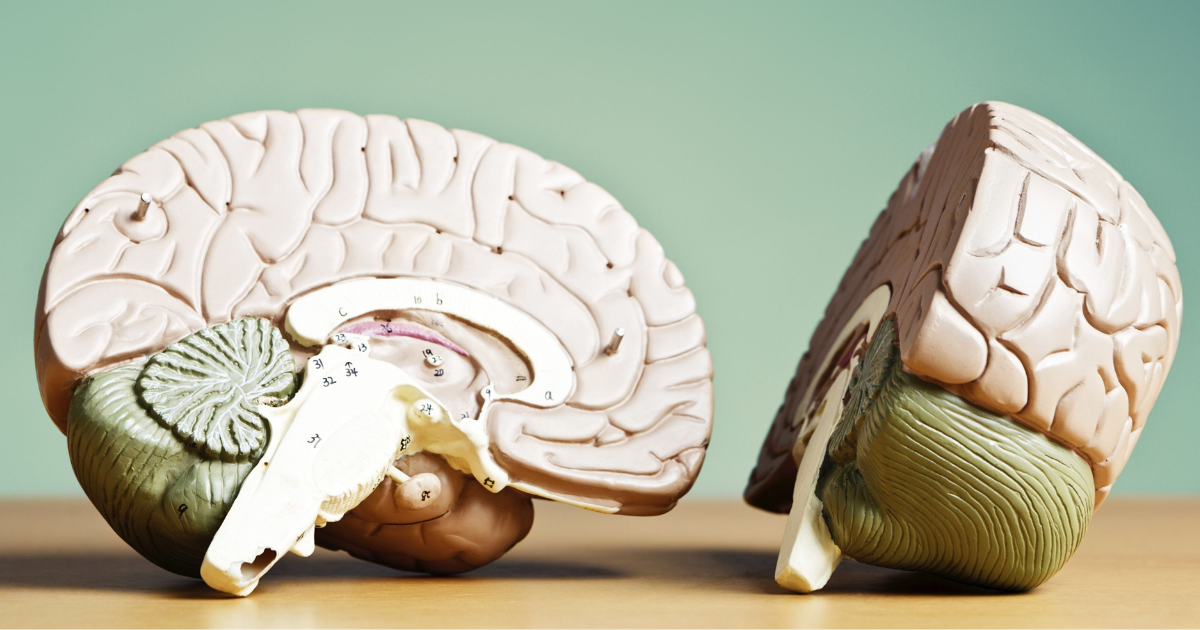
The Brainstem sits at the base, connecting to your spinal cord. It handles the stuff you don’t think about, breathing, heart rate, sleep-wake cycles. If the brainstem goes down, everything goes down. It’s the oldest part, evolutionarily speaking. A reptile brain, keeping you alive.
The Cerebellum sits at the back, looking like a mini-brain. It coordinates movement and balance. When you walk without thinking about each step, thank your cerebellum.
The Limbic System is the emotional centre. Deep inside, structures like the amygdala (fear, threat detection), hippocampus (memory formation) and hypothalamus (hormones, drives) work together to create your emotional experience. This is where trauma lives. Where attachment forms. Where stress registers.
The Cerebral Cortex is the wrinkly outer layer, the part people picture when they think “brain.” It’s divided into four lobes:
- Frontal lobe: The CEO. Decision-making, planning, impulse control, personality. This is where Elliot lost his compass.
- Parietal lobe: Sensory processing. Touch, temperature, pain, where your body is in space.
- Temporal lobe: Sound, language, memory. Wernicke’s area here helps you understand words.
- Occipital lobe: Vision. Everything you see is processed here.
The two hemispheres (left and right) communicate through a thick band of fibres called the corpus callosum. The left hemisphere handles language for most people, logic and detail. The right handles the big picture, emotion and context. It’s not that people are “left-brained” or “right-brained”; that’s a myth. You need both.
The payoff is awe: This three-pound organ, made of mostly water and fat, generates everything you are. Every memory, every hope, every fear, every moment of love. It’s the most complex thing in the known universe and it’s sitting inside your head right now, reading these words.
Learning From What Goes Wrong: Single Case Studies
How do we know what different brain regions do? We can’t exactly experiment on people. So we learn from tragedy.
Single case studies, in-depth investigations of one person with brain damage, have taught us more about the brain than almost any other method. When a specific part of the brain is damaged and a specific ability is lost, we learn that this region is necessary for that ability.
Elliot taught us about emotion and decision-making.
Phineas Gage, in 1848, taught us about personality. An explosion sent an iron rod through his skull, destroying much of his frontal lobe. Before the accident, he was responsible, hardworking, well-liked. After, he became impulsive, irreverent, unable to hold a job or follow social rules. His friends said he was “no longer Gage.” The first evidence that personality lives in the frontal lobes.
Patient HM taught us about memory. In the 1950s, surgeons removed his hippocampus to treat severe epilepsy. The surgery worked for seizures, but HM woke up unable to form new memories. He could remember his childhood, but couldn’t tell you what he’d eaten for breakfast. He read the same magazine over and over, each time feeling like it was new. His hippocampus, we learned, is essential for transferring short-term memories into long-term storage.
Patient Tan taught us about language. In 1861, Paul Broca studied a man who could only say one word: “Tan.” Tan understood everything, but couldn’t produce language. After his death, Broca found damage in a specific left frontal region, now called Broca’s area. Without it, you can’t form words, even though you know what you want to say.
The payoff is profound gratitude for the people behind the science: Every case study represents someone’s suffering. Someone’s tragedy. Someone’s family watching them become unrecognisable. The knowledge we’ve gained came at a cost they paid. The least we can do is honour their stories by using what we’ve learned.
When The Conductor Leaves: Disorders of Executive Function & Personality
Let’s go deeper into the frontal lobe, the part that makes us most human.
Executive function is the umbrella term for the cognitive skills that manage other cognitive skills. Think of it as the conductor of an orchestra. The musicians (other brain regions) can play their instruments perfectly, but without a conductor, you don’t get a symphony, you get noise.
Executive functions include:
- Inhibition: Stopping yourself from saying or doing something inappropriate
- Working memory: Holding information in mind while you use it
- Cognitive flexibility: Shifting between tasks or perspectives
- Planning: Anticipating future needs and organising steps to meet them
- Decision-making: Weighing options and choosing
When executive function is impaired, from injury, stroke, dementia or even severe stress, the result is chaos. People might:
- Get stuck on an idea and can’t shift (perseveration)
- Act on impulses without considering consequences
- Struggle to organise even simple tasks
- Lose emotional regulation, swinging from rage to apathy
Disorders of personality following brain injury are especially heartbreaking. Families often say, “They’re not the same person.” And they’re right. The person you were emerges from the specific wiring of your brain. When that wiring changes, you change.
I spoke with a woman whose husband had a frontal lobe stroke. Before, he was gentle, patient, thoughtful. After, he was irritable, impulsive, sometimes aggressive. He’d make inappropriate comments in public. He’d spend money they didn’t have. She loved him, but she was also grieving the man she’d married. He was still there, but he wasn’t. The same body, different person.
The payoff is a radical rethinking of identity: Who you are isn’t some ghost in the machine. It’s the machine. Your personality, your values, your self-control, they depend on biological tissue doing its job. This isn’t diminishing. It’s clarifying. It means we have to protect that tissue. And when it’s damaged, we have to adapt with compassion, not blame.
The Emotional Brain: Anxiety, Stress & Trauma
Now let’s talk about the parts of the brain that keep us alive and sometimes make us miserable.
The neuroscience of emotional experience centres on the limbic system, especially the amygdala. The amygdala is your smoke detector. It scans incoming information for threats and when it detects one, it sounds the alarm before your conscious brain even knows what’s happening.
This is why you jump at a loud noise before you realise it’s just a book falling. Your amygdala doesn’t wait for conscious processing. It acts. And that speed has kept our species alive for millennia.
But the smoke detector can malfunction. It can become too sensitive, sounding alarms at safe things. It can get stuck in the “on” position. This is what happens in anxiety disorders and trauma responses.
Stress activates the HPA axis, hypothalamus, pituitary and adrenal glands, releasing cortisol and adrenaline. In short bursts, this is adaptive. It helps you run from danger or perform under pressure. But chronic stress keeps this system activated, flooding your brain with chemicals that, over time, become toxic. The hippocampus (memory) shrinks. The amygdala grows more reactive. The frontal lobe (reason, control) loses influence.
Trauma changes the brain at a structural level. For someone with PTSD, the amygdala is hyper-reactive. The hippocampus struggles to contextualise memories, so the past feels present. The medial prefrontal cortex, which normally calms the amygdala, can’t do its job. The result: a brain stuck in survival mode, reacting to the present as if it’s the past.
I interviewed a veteran who’d served in combat. Years later, a car backfiring would send him diving for cover. His conscious mind knew he was safe. But his brain didn’t. The smoke detector was still sounding alarms, even though the fire was long gone.
The payoff is depathologising survival responses: Your brain’s job is to keep you alive. If it learned that the world is dangerous, it will act like the world is dangerous. That’s not a disorder. That’s adaptation. Healing means teaching the brain, slowly and safely, that it can relax now.
The Social Synapse: Attachment, Empathy & Connection
We’re not just individual brains. We’re wired for each other.
Social neuroscience studies how our brains create and respond to social experience. And the findings are beautiful: our brains are designed to connect.
When you see someone in pain, your brain activates many of the same regions as if you were in pain yourself. This is the neural basis of empathy. You don’t have to think about feeling for someone, your brain does it automatically.
When you’re securely attached to someone, your brain regulates their brain. A partner’s presence can lower your cortisol, calm your amygdala and activate your reward centres. This is co-regulation and it starts in infancy. A baby’s brain doesn’t calm itself; it calms in response to a calm caregiver. Over time, that external regulation becomes internal. You learn to soothe yourself because you were soothed by someone else.
Person perception, how we form impressions of others, involves a network of brain regions that activate within milliseconds of seeing a face. You’re judging trustworthiness, attractiveness and emotional state before you’re consciously aware of having seen anyone.
This social wiring is so fundamental that social pain, rejection, exclusion and loss activate many of the same brain regions as physical pain. Being left out literally hurts.
The payoff is evidence for what we’ve always known: We need each other. Not just emotionally. biologically. Your brain expects a connection. When it doesn’t get enough, it suffers. Loneliness isn’t just sad. It’s physically stressful. Reach out. Your brain will thank you.
The Stories We Tell Ourselves: Memory Systems & Autobiographical Truth
Memory feels like a recording. Like your brain captured everything that happened and stored it away, ready for playback.
Memory is nothing like a recording.
Memory systems are multiple, complex and deeply constructive:
- Sensory memory holds information for milliseconds
- Short-term/working memory holds a small amount for seconds to minutes
- Long-term memory is divided further:
- Explicit (declarative) memory: Facts (semantic) and events (episodic)
- Implicit memory: Skills, habits, emotional associations you’re not consciously aware of
Every time you remember something, you’re not playing back a tape. You’re reconstructing the memory from fragments, influenced by your current mood, context and beliefs. This is why memories change over time. Why do two people remember the same event differently? Why autobiographical memory, the story of your life, is a story, not a transcript.
Trauma and memory get especially complicated. Traumatic memories are often encoded differently. The hippocampus, which provides context and narrative, may not do its job properly under extreme stress. The amygdala, which records emotional significance, works overtime. The result: fragmented, sensory memories that feel present rather than past. Flashbacks. Body sensations. Emotions without story.
This is why trauma treatment often focuses on helping the hippocampus do its job, putting the memory in the past, giving it a narrative, contextualising it so it no longer feels like it’s happening now.
The payoff is freedom from the myth of perfect recall: Your memory isn’t broken because it’s not perfect. It’s working exactly as designed, constructing useful stories, not accurate recordings. The question isn’t “Is this memory true?” The question is “Is this story helping me live?”
Measuring The Mind: Neuropsychological Assessment & Rehabilitation
So the brain breaks. What do we do about it?
Neuropsychological assessment is the systematic measurement of brain function through behaviour. A neuropsychologist gives you tasks that test different cognitive domains, memory, attention, language, executive function and visuospatial skills and compares your performance to norms.
The goal isn’t just to find deficits. It’s to create a map of strengths and weaknesses. What’s working well? What’s impaired? How does this person learn best? What supports do they need?
Psychometric measurement is the science behind these tests. Basic concepts:
- Reliability: Does the test give consistent results?
- Validity: Does the test measure what it claims to measure?
- Standardisation: Is it administered and scored the same way for everyone?
In therapy contexts, measures like the CORE (Clinical Outcomes in Routine Evaluation) help track progress. Is therapy helping? Are symptoms improving? The data guides the work.
Therapy personalisation uses this information to tailor treatment. Someone with impaired executive function might need more structure, more repetition, more environmental support. Someone with memory problems might need written reminders, spaced retrieval practice, external aids. One size doesn’t fit all.
Neuropsychological rehabilitation is the process of helping people adapt to brain changes. It might involve:
- Restitution: Practicing a skill to rebuild it
- Compensation: Learning new ways to achieve goals despite deficits
- Environmental modification: Changing the environment to reduce demands
- Psychotherapy: Addressing the emotional impact of brain changes
I talked to a man who’d had a stroke affecting his language. He couldn’t find words, couldn’t follow conversations, couldn’t read like he used to. Rehabilitation wasn’t just about speech exercises. It was about grief. About redefining himself. About learning that he was still him, even if he couldn’t say it perfectly.
The payoff is hope grounded in reality: Brain damage is real. Some things won’t come back. But adaptation is possible. New pathways can form. New strategies can be learned. The brain’s plasticity means change is always possible, even if full recovery isn’t.
Beyond The Individual: Critical Neuroscience
We’ve spent this whole article looking inside individual brains. But brains don’t exist in a vacuum.
Critical neuroscience asks bigger questions: How does the social world shape the brain? How do cultural assumptions influence neuroscience research? How is brain science used and misused in society?
Consider stress. We’ve talked about how chronic stress damages the brain. But who experiences chronic stress? Poor people. Marginalised people. People living in unsafe neighbourhoods, working multiple jobs, facing discrimination. Their brains aren’t inherently different. Their environments are.
Or consider the history of neuroscience. For decades, research was done almost exclusively on WEIRD populations: Western, Educated, Industrialised, Rich, Democratic. Findings were presented as universal truths about the human brain. But a brain shaped by one culture may not be the same as a brain shaped by another. The “universal” brain was actually a specific brain, generalised to everyone.
Critical neuroscience asks:
- Who funds brain research and what questions do they want answered?
- How do brain-based explanations affect how we see people and how people see themselves?
- When does neuroscience illuminate and when does it obscure?
The payoff is humility: Brain science is powerful. But it’s not the whole story. Your brain is shaped by your world. Your biology is shaped by your history. Understanding the brain means understanding context, too.
We started with Elliot, the man who lost his emotional compass and couldn’t make decisions. We’ve travelled through brain anatomy, case studies, memory systems, trauma responses, rehabilitation and critical questions about the field itself.
What have we learned?
The brain is the most complex thing we know. It creates everything you experience, love, language, memory, fear, hope. When it breaks, you break. When it heals, you heal. You are not separate from your brain. You are your brain, in constant interaction with a body and a world.
But here’s the thing: knowing this doesn’t make you less human. It makes you more miraculous. This three-pound organ, evolved over millions of years, shaped by your unique history, constantly changing in response to experience, it’s not just a machine. It’s a living process. It’s you, becoming yourself, moment by moment.
Take care of it. Feed it well. Give it rest. Challenge it. Connect it to other brains. And when it struggles, be kind. It’s doing its best with what it’s got.
Have a look at my next blog: Foundations of Psychology: Intelligence and Creativity
10 FAQs About The Brain, Cognition & Neuropsychology
Is it true we only use 10% of our brains?
This is a complete myth! You use virtually all of your brain, just not all at once. Different tasks recruit different networks. Brain scans show activity throughout the brain, even during sleep. That 10% myth needs to die.
Can brain damage change someone’s personality completely?
Yes, absolutely. As we saw with Phineas Gage and Elliot, damage to certain areas, especially the frontal lobes, can fundamentally change who someone is. This is one of the hardest things for families to navigate. The person is still there, but they’re different.
Can the brain heal after injury?
It depends on the injury, but yes, the brain has remarkable plasticity. Other areas can take over functions. New connections can form. Rehabilitation helps this process. Complete recovery isn’t always possible, but improvement almost always is.
Why do traumatic memories feel so present?
Because of how they’re encoded. Under extreme stress, the hippocampus (which provides context and narrative) doesn’t function well, while the amygdala (emotional significance) goes into overdrive. The memory is stored as fragments of sensation and emotion, not as a story placed in the past. Healing involves helping the hippocampus do its job.
What’s the difference between a neurologist and a neuropsychologist?
Neurologists are medical doctors who diagnose and treat brain disorders. They can prescribe medication, order brain scans, do surgery. Neuropsychologists are psychologists who specialise in the relationship between brain and behaviour. They do detailed assessments, understand cognitive strengths and weaknesses and help with rehabilitation. They often work together.
Can anxiety really damage the brain?
“Damage” might be too strong. But chronic anxiety does change the brain; the amygdala can become more reactive, the hippocampus can shrink and the frontal lobe can lose influence. The good news is that these changes are reversible with effective treatment. The brain can heal.
How accurate are brain scans like fMRI?
fMRI is a powerful tool, but it’s not mind-reading. It measures blood flow, which correlates with neural activity, but the relationship is complex. A single brain scan can’t tell you what someone is thinking. And findings from group studies don’t necessarily apply to individuals. It’s a map, not a photograph.
Is memory ever completely accurate?
No. Every memory is a reconstruction, influenced by current mood, context and prior knowledge. This isn’t a flaw, it’s a feature. A perfectly accurate memory system would be useless because it would be overwhelmed with irrelevant detail. The brain stores what matters and reconstructs the rest.
Can I improve my memory?
Yes! Memory is a skill, not a fixed capacity. Strategies like spaced repetition, elaborative encoding (connecting new information to what you already know) and good sleep all help. And remember: forgetfulness is normal. The brain is designed to forget most things.
What’s the most important thing to know about brain health?
What’s good for your heart is good for your brain. Exercise, good nutrition, quality sleep, social connection and managing stress, these aren’t just “healthy living” tips. They’re brain protection. Your brain is part of your body. Take care of the body and the brain benefits.
